SEARCH
A Safe Place to Explore
Questions About Life and God
Questions About Life and God
SEARCH
By EveryStudent.com
The Bible was written over a span of 1500 years, by 40 writers. Unlike other religious writings, the Bible reads as a factual news account of real events, places, people, and dialogue. Historians and archaeologists have repeatedly confirmed its authenticity.
Using the writers' own writing styles and personalities, God shows us who he is and what it's like to know him.
There is one central message consistently carried by all 40 writers of the Bible: God, who created us all, desires a relationship with us. He calls us to know him and trust him.
The Bible not only inspires us, it explains life and God to us. It does not answer all the questions we might have, but enough of them. It shows us how to live with purpose and compassion. How to relate to others. It encourages us to rely on God for strength, direction, and enjoy his love for us. The Bible also tells us how we can have eternal life.
Multiple categories of evidence support the historical accuracy of the Bible as well as its claim to divine authorship. Here are a few reasons you can trust the Bible.
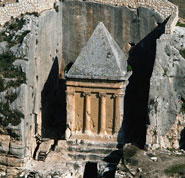 Archaeologists have consistently discovered the names of government officials, kings, cities, and festivals mentioned in the Bible – sometimes when historians didn't think such people or places existed. For example, the Gospel of John tells of Jesus healing a cripple next to the Pool of Bethesda. The text even describes the five porticoes (walkways) leading to the pool. Scholars didn't think the pool existed, until archaeologists found it forty feet below ground, complete with the five porticoes.1
The Bible has a tremendous amount of historical detail, so not everything mentioned in it has yet been found through archaeology. However, not one archaeological find has conflicted with what the Bible records.2
In contrast, news reporter Lee Strobel comments about the Book of Mormon: "Archaeology has repeatedly failed to substantiate its claims about events that supposedly occurred long ago in the Americas. I remember writing to the Smithsonian Institute to inquire about whether there was any evidence supporting the claims of Mormonism, only to be told in unequivocal terms that its archaeologists see 'no direct connection between the archaeology of the New World and the subject matter of the book.'" Archaeologists have never located cities, persons, names, or places mentioned in the Book of Mormon.3
Many of the ancient locations mentioned by Luke, in the Book of Acts in the New Testament, have been identified through archaeology. "In all, Luke names thirty-two countries, fifty-four cities and nine islands without an error."4
Archaeology has also refuted many ill-founded theories about the Bible. For example, a theory still taught in some colleges today asserts that Moses could not have written the Pentateuch (the first five books of the Bible), because writing had not been invented in his day. Then archaeologists discovered the Black Stele. "It had wedge-shaped characters on it and contained the detailed laws of Hammurabi. Was it post-Moses? No! It was pre-Mosaic; not only that, but it was pre-Abraham (2,000 B.C.). It preceded Moses' writings by at least three centuries."5
Archaeology consistently confirms the historical accuracy of the Bible.
Click here to see a chart listing some of the major archaeological finds.
Chart listing some of the major archaeological finds…
| ARCHAEOLOGICAL FIND | SIGNIFICANCE |
| Mari Tablets | Over 20,000 cuneiform tablets, which date back to Abraham's time period, explain many of the patriarchal traditions of Genesis. |
| Ebla Tablets | Over 20,000 tablets, many containing laws similar to the Deuteronomy law code. The previously thought fictitious five cities of the plain in Genesis 14 (Sodom, Gomorrah, Admah, Zeboiim, and Zoar) are identified. |
| Nuzi Tablets | They detail customs of the 14th and 15th centuries that are parallel to the patriarchal accounts such as maids producing children for barren wives. |
| Black Stele | Proved that writing and written laws existed three centuries before the Mosaic laws. |
| Temple Walls of Karnak, Egypt | Signifies a 10th century BC reference to Abraham. |
| Laws of Eshnunna (ca. 1950 BC); Lipit-Ishtar Code (ca. 1860 BC); Laws of Hammurabi (ca. 1700 BC) | Show that the law codes of the Pentateuch were not too sophisticated for that period. |
| Ras Shamra Tablets | Provide information on Hebrew poetry. |
| Lachish Letters | Describe Nebuchadnezzar's invasion of Judah and give insight into the time of Jeremiah. |
| Gedaliah Seal | References Gedaliah is spoken of in 2 Kings 25:22. |
| Cyrus Cylinder | Authenticates the Biblical description of Cyrus' decree to allow the Jews to rebuild the temple in Jerusalem (see 2 Chronicles 36:23; Ezra 1:2-4). |
| Moabite Stone | Gives information about Omri, the sixth king of Israel. |
| Black Obelisk of Shalmaneser III | Illustrates how Jehu, king of Israel, had to submit to the Assyrian king. |
| Taylor Prism | Contains an Assyrian text which details Sennacherib's attack on Jerusalem during the time of Hezekiah, king of Israel. |
| PAST CHARGES BY CRITICS | ANSWERED BY ARCHAEOLOGY |
| Moses could not have written Pentateuch because he lived before the invention of writing. | Writing existed many centuries before Moses. |
| Abraham's home city of Ur does not exist. | Ur was discovered. One of the columns had the inscription "Abram." |
| The city built of solid rock called "Petra" does not exist. | Petra was discovered. |
| The story of the fall of Jericho is myth. The city never existed. | The city was found and excavated. It was found that the walls tumbled in the exact manner described by the biblical narrative. |
| The "Hittites" did not exist. | Hundreds of references to the amazing Hittite civilization have been found. One can even get a doctorate in Hittite studies at the University of Chicago. |
| Belshazzar was not a real king of Babylon; he is not found in the records. | Tablets of Babylonia describe the reign of this coregent and son of Nabonidus. |
 Some people have the idea that the Bible has been translated "so many times" that it has become corrupted through stages of translating. That would probably be true if the translations were being made from other translations. But translations are actually made directly from original Greek, Hebrew and Aramaic source texts based on thousands of ancient manuscripts.
The accuracy of today’s Old Testament was confirmed in 1947 when archaeologists found “The Dead Sea Scrolls” along today's West Bank in Israel. "The Dead Sea Scrolls" contained Old Testament scripture dating 1,000 years older than any manuscripts we had. When comparing the manuscripts at hand with these, from 1,000 years earlier, we find agreement 99.5% of the time. And the .5% differences are minor spelling variances and sentence structure that don't change the meaning of the sentence.
Regarding the New Testament, it is humanity's most reliable ancient document.
All ancient manuscripts were written on papyrus, which didn’t have much of a shelf life. So people hand-copied originals, to maintain the message and circulate it to others.
Few people doubt Plato’s writing of “The Republic.” It’s a classic, written by Plato around 380 B.C. The earliest copies we have of it are dated 900 A.D., which is a 1,300-year time lag from when he wrote it. There are only seven copies in existence.
Caesar’s “Gallic Wars” were written around 100-44 B.C. The copies we have today are dated 1,000 years after he wrote it. We have ten copies.
When it comes to the New Testament, written between 50-100 A.D, there are more than 5,000 copies. All are within 50-225 years of their original writing. Further, when it came to Scripture, scribes (monks) were meticulous in their copying of original manuscripts. They checked and rechecked their work, to make sure it perfectly matched. What the New Testament writers originally wrote is preserved better than any other ancient manuscript. We can be more certain of what we read about Jesus’ life and words, than we are certain of the writings of Caesar, Plato, Artistotle and Homer.
For a comparison of the New Testament to other ancient writings, click here.
A comparison of the New Testament to other ancient writings…
Here is how the New Testament compares to other ancient writings*:
| Author | Book | Date Written |
Earliest Copies |
Time Gap | # of Copies |
| Homer | Iliad | 800 B.C. | c. 400 B.C. | c. 400 yrs. | 643 |
| Herodotus | History | 480-425 B.C. | c. A.D. 900 | c. 1,350 yrs. | 8 |
| Thucydides | History | 460-400 B.C. | c. A.D. 900 | c. 1,300 yrs. | 8 |
| Plato | 400 B.C. | c. A.D. 900 | c. 1,300 yrs. | 7 | |
| Demosthenes | 300 B.C. | c. A.D. 1100 | c. 1,400 yrs. | 200 | |
| Caesar | Gallic Wars | 100-44 B.C. | c. A.D. 900 | c. 1,000 yrs. | 10 |
| Tacitus | Annals | A.D. 100 | c. A.D. 1100 | c. 1,000 yrs. | 20 |
| Pliny Secundus |
Natural History |
A.D. 61-113 | c. A.D. 850 | c. 750 yrs. | 7 |
| New Testament | A.D. 50-100 | c. A.D. 114 (portions) c. A.D. 200 (books) c. A.D. 325 (complete N.T.) |
c. +50 yrs. c. 100 yrs. c. 225 yrs. |
5366 | |
*McDowell, Josh. The New Evidence that Demands a Verdict (Thomas Nelson Publishers, 1999), p. 55.
 Four of the writers of the New Testament each wrote their own biography on the life of Jesus. These are called the four gospels, the first four books of the New Testament. When historians try to determine if a biography is reliable, they ask, "How many other sources report the same details about this person?"
Here's how this works. Imagine you are collecting biographies of President John F. Kennedy. You find many biographies describing his family, his presidency, his goal of putting a man on the moon, and his handling of the Cuban Missile Crisis. Regarding Jesus, do we find multiple biographies reporting similar facts about his life? Yes. Here is a sampling of facts about Jesus, and where you would find that fact reported in each of their biographies.
| Matthew | Mark | Luke | John | |
| Jesus was born of a virgin | 1:18-25 | - | 1:27, 34 | - |
| He was born in Bethlehem | 2:1 | - | 2:4 | - |
| He lived in Nazareth | 2:23 | 1:9, 24 | 2:51, 4:16 | 1:45, 46 |
| Jesus was baptized by John the Baptist | 3:1-15 | 1:4-9 | 3:1-22 | - |
| He performed miracles of healing | 4:24, etc. | 1:34, etc. | 4:40, etc. | 9:7 |
| He walked on water | 14:25 | 6:48 | - | 6:19 |
| He fed five thousand people with five loaves and two fish |
14:7 | 6:38 | 9:13 | 6:9 |
| Jesus taught the common people | 5:1 | 4:25, 7:28 | 9:11 | 18:20 |
| He spent time with social outcasts | 9:10, 21:31 | 2:15, 16 | 5:29, 7:29 | 8:3 |
| He argued with the religious elite | 15:7 | 7:6 | 12:56 | 8:1-58 |
| The religious elite plotted to kill him | 12:14 | 3:6 | 19:47 | 11:45-57 |
| They handed Jesus over to the Romans | 27:1, 2 | 15:1 | 23:1 | 18:28 |
| Jesus was flogged | 27:26 | 15:15 | - | 19:1 |
| He was crucified | 27:26-50 | 15:22-37 | 23:33-46 | 19:16-30 |
| He was buried in a tomb | 27:57-61 | 15:43-47 | 23:50-55 | 19:38-42 |
| Jesus rose from the dead and appeared to his followers |
28:1-20 | 16:1-20 | 24:1-53 | 20:1-31 |
Two of the gospel biographies were written by the apostles Matthew and John, men who knew Jesus personally and traveled with him for over three years. The other two books were written by Mark and Luke, close associates of the apostles. These writers had direct access to the facts they were recording. At the time of their writing, there were still people alive who had heard Jesus speak, watched him heal people and perform miracles.
So the early church readily accepted the four gospels because they agreed with what was already common knowledge about Jesus' life.
Each of the gospels of Matthew, Mark, Luke, and John read like news reports, factual accounts of the day's events, each from their own perspective. The descriptions are unique to each writer, but the facts are in agreement.
For a sample from one of the Gospels, click here.
Sample of what is presented in one of the Gospels…
The Gospels are presented as matter-of-fact, "this is how it was." Even reports of Jesus doing the miraculous is written without sensationalism or mysticism. One typical example is the account in Luke, chapter 8, where Jesus brings a little girl back to life. Notice the details and clarity in its reporting:
Then a man named Jairus, a ruler of the synagogue, came and fell at Jesus' feet, pleading with him to come to his house because his only daughter, a girl of about twelve, was dying.
As Jesus was on his way, the crowds almost crushed him. And a woman was there who had been subject to bleeding for twelve years, but no one could heal her.
She came up behind him and touched the edge of his cloak, and immediately her bleeding stopped.
"Who touched me?" Jesus asked. When they all denied it, Peter said, "Master, the people are crowding and pressing against you." But Jesus said, "Someone touched me; I know that power has gone out from me."
Then the woman, seeing that she could not go unnoticed, came trembling and fell at his feet. In the presence of all the people, she told why she had touched him and how she had been instantly healed. Then he said to her, "Daughter, your faith has healed you. Go in peace."
While Jesus was still speaking, someone came from the house of Jairus, the synagogue ruler. "Your daughter is dead," he said. "Don't bother the teacher anymore." Hearing this, Jesus said to Jairus, "Don't be afraid; just believe, and she will be healed."
When he arrived at the house of Jairus, he did not let anyone go in with him except Peter, John and James, and the child's father and mother. Meanwhile, all the people were wailing and mourning for her. "Stop wailing," Jesus said. "She is not dead but asleep." They laughed at him, knowing that she was dead.
But he took her by the hand and said, "My child, get up!" Her spirit returned, and at once she stood up. Then Jesus told them to give her something to eat. Her parents were astonished, but he ordered them not to tell anyone what had happened.
Like other accounts of Jesus' healing people, this has a ring of authenticity. If it were fiction, there are portions of it that would have been written differently. For example, in a fictional account, there wouldn't be an interruption with something else happening. If it were fiction, the people in mourning would not have laughed at Jesus' statement; get angry maybe, be hurt by it, but not laugh. And in writing fiction, would Jesus have ordered the parents to be quiet about it? You would expect the healing to make a grand point. But real life isn't always smooth. There are interruptions. People do react oddly. And Jesus had his own reasons for not wanting the parents to broadcast this.
The best test of the Gospels' authenticity is to read them yourself. Does it read like a report of real events, or like fiction? If it is real, then God has revealed himself to us. Jesus came, lived, taught, inspired, and brought life to millions who read his words and life today. What Jesus stated in the gospels, many have found reliably true: "I have come that they might have life, and have it more abundantly." (John 10:10)
In the early years after Jesus' death and resurrection, there was no apparent need for written biographies about Jesus. Those living in the Jerusalem region were witnesses of Jesus and well aware of his ministry.6
However, when news of Jesus spread beyond Jerusalem, and the eyewitnesses were no longer readily accessible, there was a need for written accounts to educate others about Jesus' life and ministry.
If you would like to know more about Jesus, this article will give you a good summary of his life: Why Jesus is God.
 The early church accepted the New Testament books almost as soon as they were written. It’s already been mentioned that the writers were friends of Jesus or his immediate followers, men to whom Jesus had entrusted the leadership of the early church. The Gospel writers Matthew and John were some of Jesus' closest followers. Mark and Luke were companions of the apostles, having access to the apostles' account of Jesus' life.
The other New Testament writers had immediate access to Jesus as well: James and Jude were half-brothers of Jesus who initially did not believe in him. Peter was one of the 12 apostles. Paul started out as a violent opponent of Christianity and a member of the religious ruling class, but he became an ardent follower of Jesus, convinced that Jesus rose from the dead.
The reports in the New Testament books lined up with what thousands of eyewitnesses had seen for themselves.
When other books were written hundreds of years later, it wasn't difficult for the church to spot them as forgeries. For example, the Gospel of Judas was written by the Gnostic sect, around 130-170 A.D., long after Judas' death. The Gospel of Thomas, written around 140 A.D., is another example of a counterfeit writing erroneously, bearing an apostle's name. These and other Gnostic gospels conflicted with the known teachings of Jesus and the Old Testament, and often contained numerous historical and geographical errors.7
In A.D. 367, Athanasius formally listed the 27 New Testament books (the same list that we have today). Soon after, Jerome and Augustine circulated this same list. These lists, however, were not necessary for the majority of Christians. By and large, the whole church had recognized and used the same list of books since the first century after Christ.
As the church grew beyond the Greek-speaking lands and needed to translate the Scriptures, and as splinter sects continued to pop up with their own competing holy books, it became more important to have a definitive list.
 Not only do we have well-preserved copies of the original manuscripts, but we also have testimony from both Jewish and Roman historians.
The gospels report that Jesus of Nazareth performed many miracles, was executed by the Romans, and rose from the dead. Numerous ancient historians back the Bible's account of the life of Jesus and his followers:
Cornelius Tacitus (A.D. 55-120), a historian of first-century Rome, is considered one of the most accurate historians of the ancient world.8 An excerpt from Tacitus tells us that the Roman emperor Nero "inflicted the most exquisite tortures on a class … called Christians.… Christus [Christ], from whom the name had its origin, suffered the extreme penalty during the reign of Tiberius at the hands of one of our procurators, Pontius Pilatus.…"9
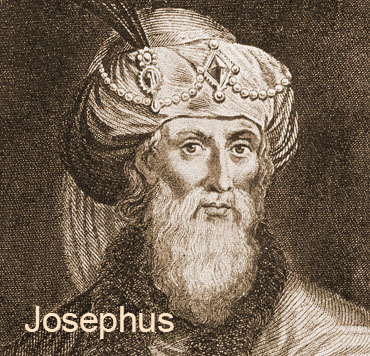
Flavius Josephus, a Jewish historian (A.D. 38-100), wrote about Jesus in his Jewish Antiquities. From Josephus, "we learn that Jesus was a wise man who did surprising feats, taught many, won over followers from among Jews and Greeks, was believed to be the Messiah, was accused by the Jewish leaders, was condemned to be crucified by Pilate, and was considered to be resurrected."10
Suetonius, Pliny the Younger, and Thallus also wrote about Christian worship and persecution that is consistent with New Testament accounts.
Even the Jewish Talmud, certainly not biased toward Jesus, concurs about the major events of his life. From the Talmud, "we learn that Jesus was conceived out of wedlock, gathered disciples, made blasphemous claims about himself, and worked miracles, but these miracles are attributed to sorcery and not to God."11
This is remarkable information considering that most ancient historians focused on political and military leaders, not on obscure rabbis from distant provinces of the Roman Empire. Yet ancient historians (Jews, Greeks and Romans) confirm the major events that are presented in the New Testament, even though they were not believers themselves.
 Yes. For faith to really be of any value, it must be based on facts, on reality. Here is why. If you were taking a flight to London, you would probably have faith that the jet is fueled and mechanically reliable, the pilot trained, and no terrorists on board. Your faith, however, is not what gets you to London. Your faith is useful in that it got you on the plane. But what actually gets you to London is the integrity of the plane, pilot, etc. You could rely on your positive experience of past flights. But your positive experience would not be enough to get that plane to London. What matters is the object of your faith – is it reliable?
Is the New Testament an accurate, reliable presentation of Jesus? Yes. We can trust the New Testament because there is enormous factual support for it. This article touched on the following points: historians concur, archaeology concurs, the four Gospel biographies are in agreement, the preservation of document copies is remarkable, and there is superior accuracy in the translations. All of this gives a solid foundation for believing that what we read today is what the original writers wrote and experienced in real life, in real places.
John, one of the writers sums it up well, "Now Jesus did many other signs in the presence of the disciples, which are not written in this book; but these are written so that you may believe that Jesus is the Christ, the Son of God, and that by believing you may have life in his name."12
You are welcome to sign up for a free study of the Gospel of John, which comes to you by email. Click here: Gospel of John free email series.
| ► | How to know God... |
| ► | I have a question or comment... |
Footnotes: (1) Strobel, Lee. The Case for Christ (Zondervan Publishing House, 1998), p. 132. (2) The renowned Jewish archaeologist, Nelson Glueck, wrote: "It may be stated categorically that no archaeological discovery has ever controverted a biblical reference." Nelson Glueck, Rivers in the Desert: History of Negev. Jewish Publication Society of America, Philadelphia, 1969, P. 176. (3) Strobel, p. 143-144. (4) Geisler, Norman L. Baker Encyclopedia of Christian Apologetics (Grand Rapids: Baker, 1998). (5) McDowell, Josh. Evidence That Demands a Verdict (1972), p. 19. (6) See Acts 2:22, 3:13, 4:13, 5:30, 5:42, 6:14, etc. (7) Bruce, F.F. The Books and the Parchments: How We Got Our English Bible (Fleming H. Revell Co., 1950), p. 113. (8) McDowell, Josh. The New Evidence that Demands a Verdict (Thomas Nelson Publishers, 1999), p. 55. (9) Tacitus, A. 15.44. (10) Wilkins, Michael J. & Moreland, J.P. Jesus Under Fire (Zondervan Publishing House, 1995), p. 40. (11) Ibid. (12) John 20:30,31
Other articles/videos you might be interested in…